
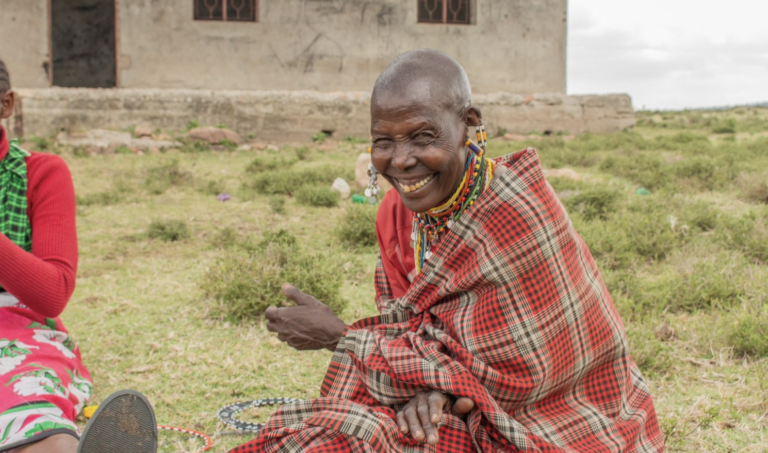
Naisuyaisui’s life had been marked by loss, resilience, and an unyielding commitment to her dignity. An elderly widow living in Soit-Sambu Ward, Ngorongoro District, she faced the harsh realities of living in a deeply patriarchal system.
When her husband passed away, ownership of the family livestock and land was immediately transferred to her stepson and her husband’s male relatives, leaving Naisuyaisui with nothing despite her years of care, labor, and contribution to the household.
This dispossession was compounded by threats of forced relocation back to her birth family and even physical assaults, clear acts of gender-based violence rooted in economic control and inheritance denial.
Yet, Naisuyaisui refused to accept injustice. She reported the matter to the police and filed a case in the Primary Court in Loliondo, determined to reclaim her rights. The legal system, however, moved slowly, and social pressures persisted, keeping her exposed to continued risk.
In 2024, Pastoral Women’s Council (PWC) stepped in through its Rights Department, offering a survivor-centered response that combined legal support, protection, and economic recovery.
PWC convened an Alternative Dispute Resolution (ADR) process, bringing together the Police Gender Desk, a Social Welfare Officer, traditional leaders, Women’s Rights and Leadership Forum (WRLF) members, family representatives, and community members. Before mediation began, participants were oriented on Tanzanian probate and inheritance law, strengthening awareness of widows’ rights and challenging harmful social norms.
The mediation led to significant outcomes: 15 cows and 22 goats were restored to Naisuyaisui, the land under her occupancy was officially recognized, and assurances were given to protect her from further intimidation or harassment.
Recognizing that legal restitution alone was not enough, PWC, with support from IWGIA, provided Naisuyaisui with a flexible survivor-centered grant of TZS 1,000,000.
She used the funds strategically to rebuild her life:
- Livelihood Investment (400,000 TZS): She purchased 10 goats for fattening and resale, creating a sustainable source of independent income.
- Land Security and Documentation (300,000 TZS): Funds facilitated travel to district offices to formally document her case and begin processes to secure her land rights through a Certificate of Customary Right of Occupancy (CCRO).
- Household Income Stabilization and Social Protection (200,000 TZS): Contributions to a VICOBA savings group strengthened social safety nets, provided access to loans, and supported her community integration.
- Emergency and Essential Needs (100,000 TZS): Immediate household support ensured stability during the transition period following economic disruption.
Through coordinated legal mediation, economic empowerment, land documentation support, and group-based savings inclusion, Naisuyaisui moved from dispossession and violence toward stabilized livelihood and strengthened protection within a single survivor-centered response framework.
Through this integrated support, Naisuyaisui regained her assets, secured her land rights, stabilized her household, and strengthened her resilience against renewed threats. She gained not only legal recognition but also the confidence and capacity to rebuild her life on her own terms. Her case is one of many in pastoralist communities where gender-based violence intersects with property grabbing and economic exclusion. It highlights the layered discrimination faced by widows and other particularly vulnerable women within Indigenous agro-pastoralist and pastoralist contexts.
Naisuyaisui’s story is a powerful example of how survivor-centered approaches that integrate legal advocacy, economic empowerment, and community protection can transform lives. Continued investment in integrated GBV response, including rapid-response grants, land documentation support, livelihood recovery, legal literacy, and community-level norm transformation, is essential to ensure survivors are not only protected in the immediate aftermath of violence, but equipped to rebuild livelihoods and reintegrate into their communities with dignity, self-reliance and long-term security.
In the long run, sustaining these integrated efforts is critical to advancing women’s land rights, economic justice, and protection across pastoralist communities in northern Tanzania
Today, Naisuyaisui is not only a survivor but a symbol of resilience, showing that with the right support, women in agro-pastoralist and pastoralist communities can overcome violence, reclaim their rights, and rebuild livelihoods, ensuring justice, self-reliance, and long-term protection for themselves and their families.