
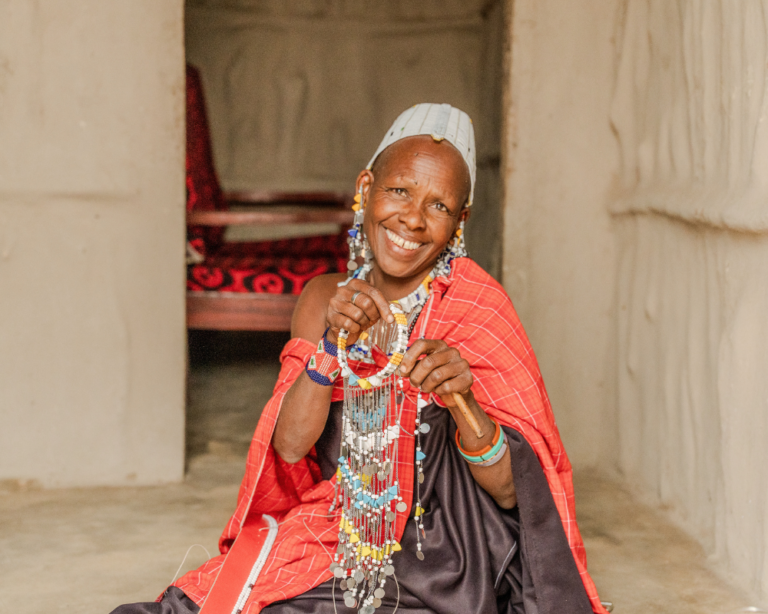
Maria Kimai is a member of the Nadumu VICOBA group in Esilalei village, but before joining the group in 2022, her life was marked by financial hardship and limited opportunities to earn a stable income.
At the time, Maria made a living by cutting down trees, an income-generating activity commonly undertaken by some Maasai women to earn a small income. The work was physically demanding, requiring her to collect wood and turn it into charcoal, yet it provided very little financial return.
It was one of the few ways she knew to earn money, but it brought her into conflict with local authorities. When authorities took action against tree cutting, Maria was punished, leaving her without a reliable source of income.
She then began selling SIM cards, doing whatever work she could to earn enough money to meet her family’s basic needs. At times, she says, her income was barely enough to buy pens and other school supplies for her children.
“I started selling SIM cards so that I could at least afford pens for my children”
But Maria’s livelihood began to change when she joined VICOBA.
Through the group, she became part of a community where women save together, access financial opportunities, learn from one another, and think about new ways to generate income. With this support, Maria eventually found a livelihood that was not only more sustainable but also connected to her own culture and skills: making Maasai jewelry.
Today, Maria creates Maasai belts and a variety of other handmade jewelry and accessories, growing into a business that provides her with a regular income. She earns between 20,000 and 30,000 Tanzanian shillings per piece, with her weekly income reaching as much as 200,000 Tanzanian shillings (approximately US$78 or €65) per week.
Maria has used her earning to invest in her family’s future. One of her biggest accomplishments has been building her own house, something that represents a significant improvement in her family’s living conditions. She has also begun investing her income in livestock by purchasing two goats and two heifers. Maria’s increased financial stability has also changed what she can do for her children. When they face challenges or need support, she is now in a position to help them.
She has moved from struggling to find enough money for basic school supplies to building a home, investing in livestock, running her own business, and supporting her children.
Maria’s transformation shows the importance of creating economic opportunities that build on what women already know and can do. By turning Maasai craftsmanship into an income-generating activity, Maria has been able to create a livelihood while preserving and valuing an important part of her cultural identity.
Today, Maria is no longer dependent on a single, unstable source of income.
She has a skill, a business, savings and investments, and assets that can continue supporting her family.
Maria’s story is a powerful reminder that economic empowerment is not simply about providing women with money. It is about creating pathways for women to develop sustainable livelihoods, build assets, and make decisions about their own futures.