
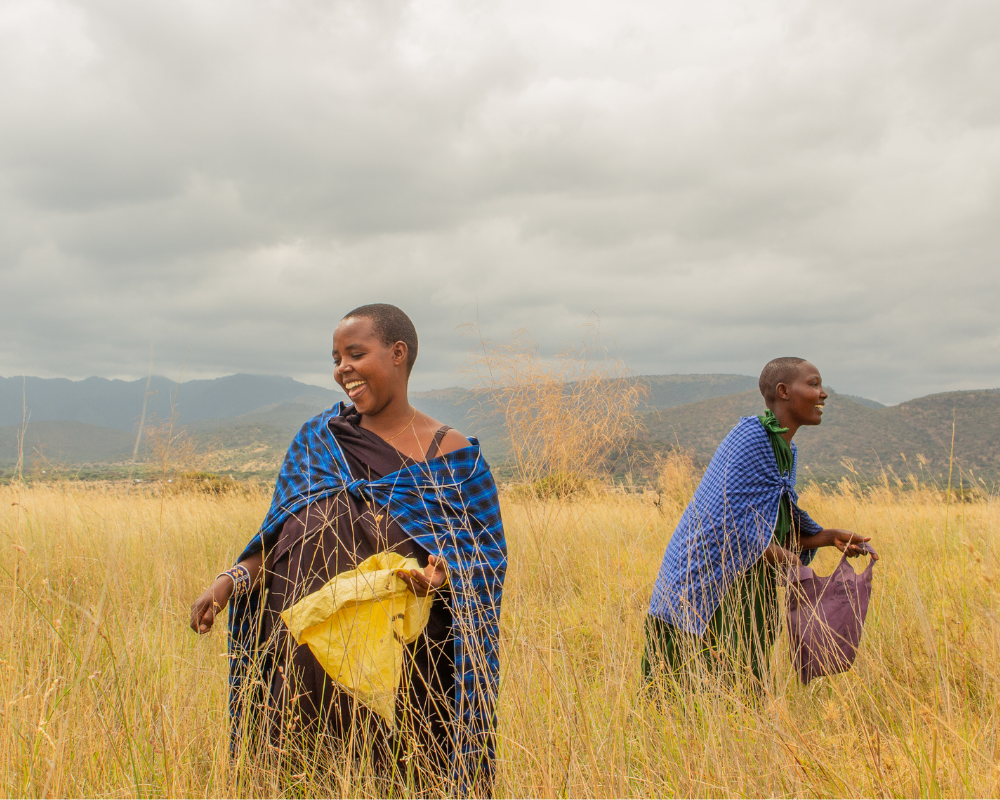
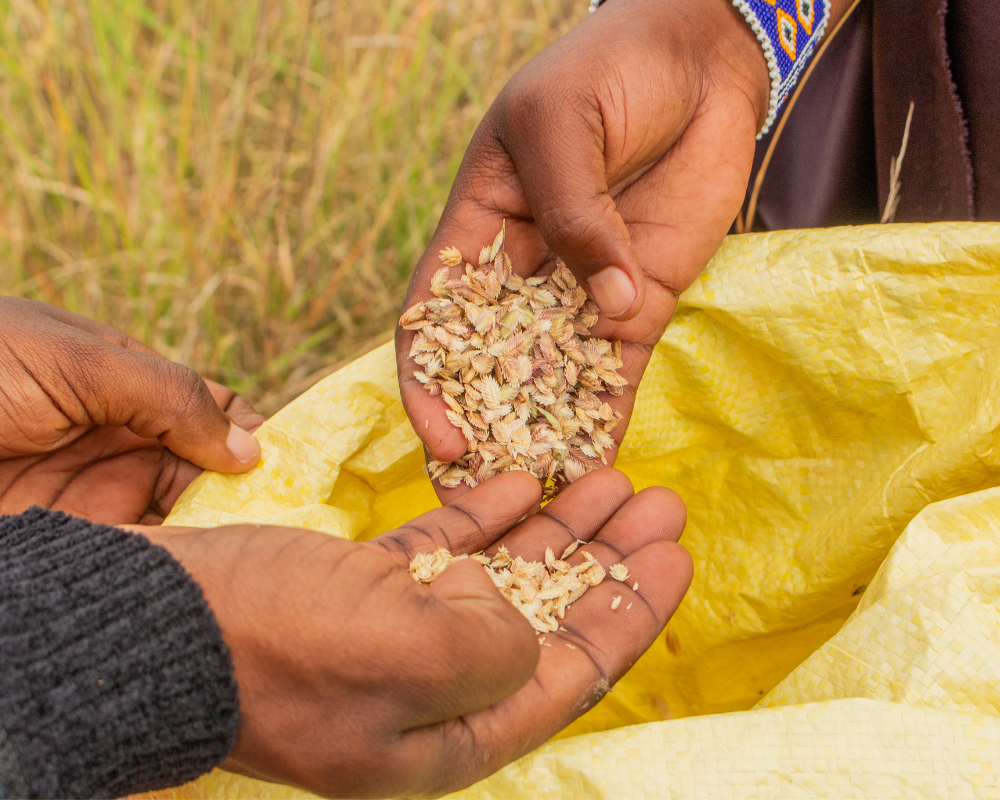
An inspiring initiative is quietly transforming landscapes and lives.
In Monduli District, six villages: Baraka, Selela, Loisirwa, Makuyuni, Mbaashi, and Mswakini Juu, are leading the way in ecological restoration and women’s economic empowerment through Grass Seed Banks (GSBs).
The main goal of the GSB program is to:
- Restore degraded grazing lands naturally through native grass cultivation
- Economically empower women by giving them opportunities to grow, harvest, and sell grass seeds and grass
But its benefits don’t end there, these community-run GSBs store and multiply native grasses that:
- Restore degraded rangelands
- Prevent soil erosion
- Improve soil water retention
- Revive traditional ecological knowledge
- Promote sustainable harvesting practices
- It acts as a powerful nature-based solution to climate change, helping absorb carbon
- Create lifelines for livestock during drought, supporting food security and livelihoods
At Pastoral Women’s Council (PWC), these initiatives are fully led and managed by women, where their leadership repositions them as rightful stewards of the land, empowered not only to nurture it but to protect and advocate for it.
Now in 2025 and its fourth year of implementation, we have made significant progress, having secured 77 acres of land across all six villages and training women in sustainable land management techniques, including:
- Digging half-moon bands to trap rainwater and reduce runoff
- Planting and nurturing native grasses
- Practicing simple maintenance methods such as weeding, reseeding, and harvesting
The Loisirwa Grass Seed Bank, or as the women named it, “Majani” farm, was established in 2024 and is one of the most powerful success stories to date. Though still young, it’s already transforming lives and landscapes in tangible ways.
In just one year since their first harvest, the women of Loisirwa earned 1,115,000 Tanzanian Shillings (around 428.85 USD) from the sale of seeds and grasses.
These earnings were equally divided among the women in the group, providing each of them with a meaningful and direct source of income.
This financial independence has empowered them to lead stronger, more confident lives, not just as contributors to their families, but as leaders in their community.
The grasses grown in Loisirwa are not only sold, but also used to feed livestock, ensuring animals survive during harsh droughts, an act that has profound ripple effects.
Because in pastoralist communities, an animal is never “just” an animal.
It is food on the table, school fees for children, medical care, income for the household, and security for the home, for children’s education, and for generations to come.
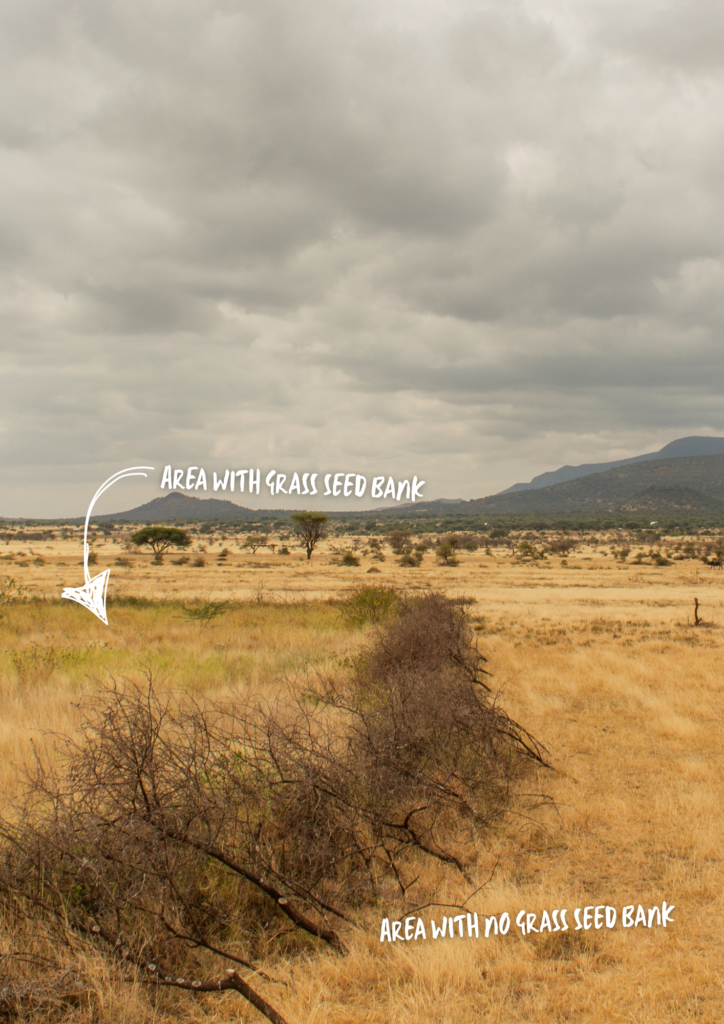
But it didn’t stop there. With this new income, many of the women began making smart, long-term investments, including purchasing their owncattle. These animals not only provide daily essentials like milk, but they also grow, reproduce, and offer a new sustainable source of income.
And as their confidence and resources grew, so did their influence. Today, these women are not just benefiting from restored lands; they have become leaders in their communities. They are teaching others about the importance of nurturing the earth, protecting grazing lands, and using nature-based solutions to build resilience.
Their work is reviving traditional ecological knowledge and placing women at the center of land stewardship.